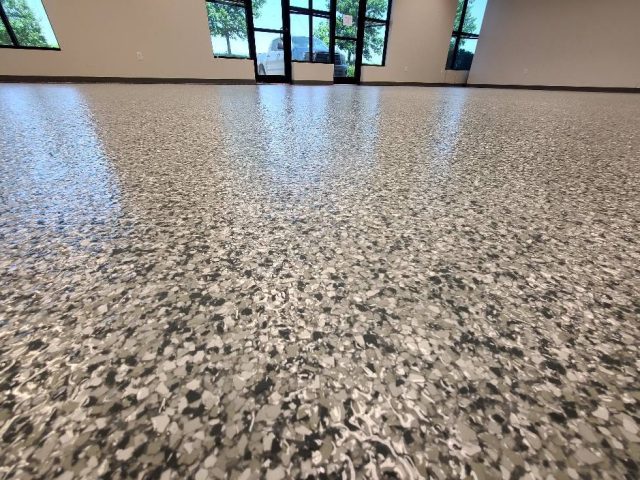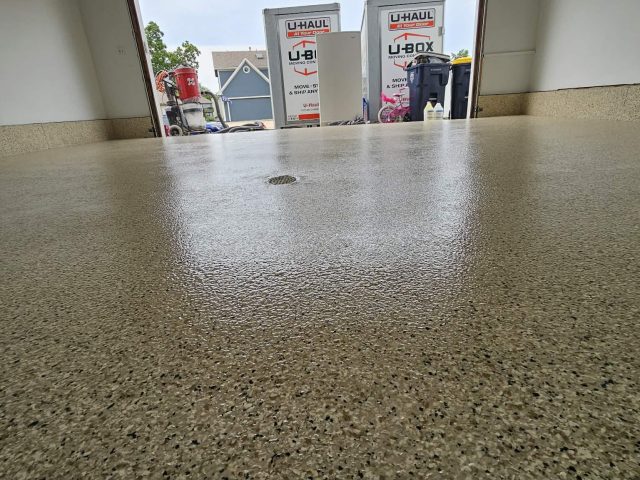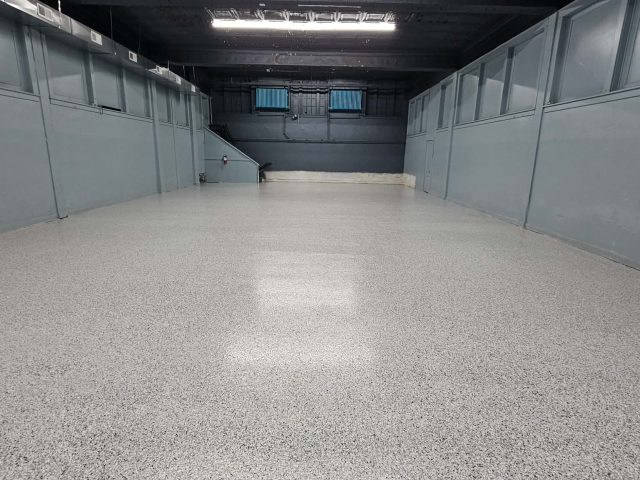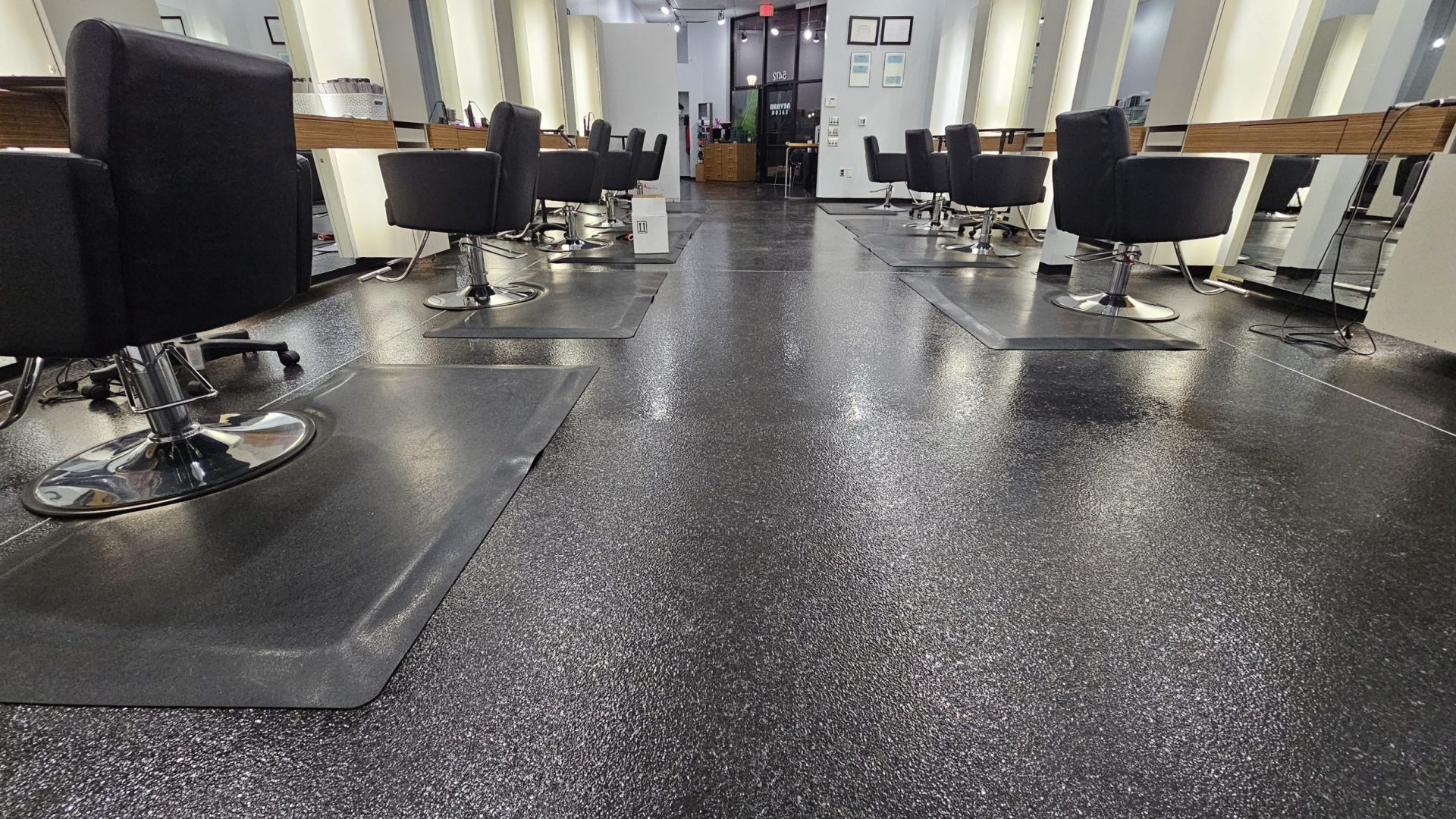
Flake epoxy flooring is one of the most durable, attractive, and long-lasting solutions for Kansas City commercial spaces—from warehouses and auto shops to retail stores, restaurants, and manufacturing facilities. But even the highest-quality epoxy system will fail if the concrete underneath isn’t properly prepared.
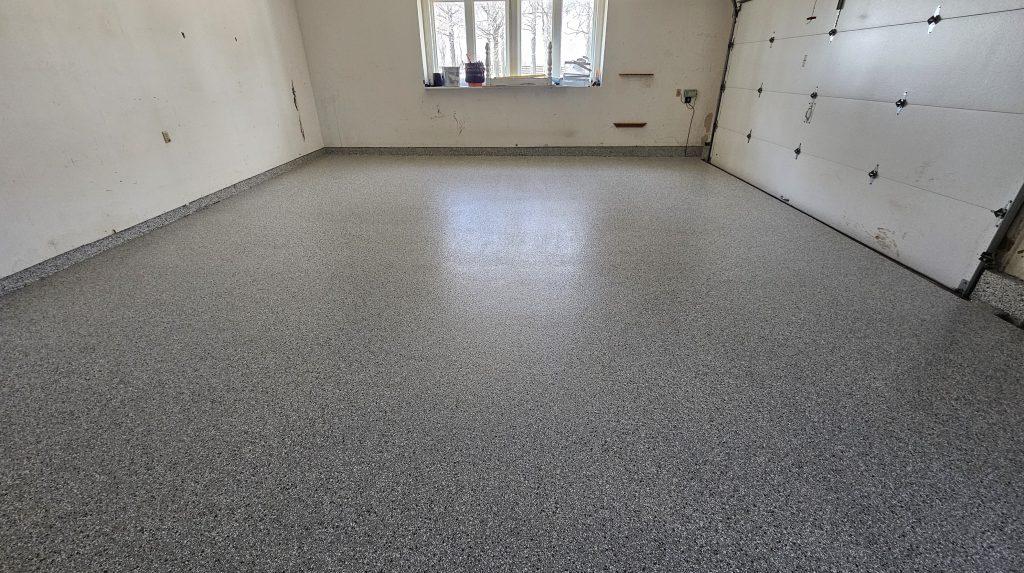
Successful flake epoxy installation starts long before the first coat is applied. At High Stakes Epoxy LLC, we follow a strict preparation process to ensure strong adhesion, long-term durability, chemical resistance, and a flawless finish.
This checklist walks Kansas City business owners through the essential steps required to prepare commercial concrete for a professional flake epoxy system.
⭐ 1. Assess the Current Condition of the Concrete
Before any installation begins, evaluate the surface for:
- Cracks
- Pitting or spalling
- Oil or grease stains
- Moisture issues
- Old coatings or adhesives
- Uneven surfaces
- Soft or crumbling areas
Understanding the existing condition determines what prep work is needed and prevents failure down the line.
⭐ 2. Clear the Area of All Equipment and Obstacles
Commercial spaces often contain:
- Machinery
- Racks
- Shelving
- Vehicles
- Inventory
- Workbenches
Everything should be cleared or temporarily relocated. Large items may require equipment lifts or moving crews to ensure complete access to the slab.
⭐ 3. Conduct a Moisture Test (Critical for Kansas City Climate)
Moisture is one of the biggest reasons epoxy systems fail. Given Kansas City’s humidity and seasonal temperature changes, testing is essential.
Common moisture tests include:
- Calcium chloride test
- In-situ RH test
- Moisture meter readings
If moisture is present, a moisture-mitigating primer or vapor barrier system may be required.
⭐ 4. Remove Old Coatings, Paint, Glue, or Sealers
Epoxy cannot bond to:
- Paint
- Acrylic sealers
- Tile glue
- Old epoxy
- Wax coatings
Professionals use:
- Diamond grinding
- Shot blasting
- Scarifying
…to remove all surface contaminants and expose solid, clean concrete.
⭐ 5. Degrease and Deep Clean the Concrete
Commercial floors—especially auto shops, warehouses, and kitchens—often accumulate:
- Oils
- Grease
- Tire marks
- Chemical spills
- Dirt buildup
These contaminants prevent epoxy adhesion.
Steps include:
- Applying an industrial degreaser
- Scrubbing thoroughly
- Hot-water pressure washing if needed
- Ensuring the surface is completely rinsed and dried
⭐ 6. Repair All Cracks, Chips, and Surface Damage
Flake epoxy is durable, but it cannot hide serious imperfections. Concrete repairs ensure a structurally sound and visually clean final result.
Repairs typically include:
- Filling cracks with polymer repair materials
- Patching pits and spalling
- Rebuilding damaged edges
- Smoothing uneven areas
Proper repair work prevents cracks from telegraphing through the epoxy after installation.
⭐ 7. Diamond Grind the Entire Surface
Grinding is one of the most important steps in epoxy preparation. It opens up the concrete’s pores and creates a CSP (Concrete Surface Profile) that allows epoxy to chemically bond with the slab.
Professional grinding provides:
- Better adhesion
- A level surface
- Removal of weak or dusty concrete
- Increased epoxy penetration
This step is essential for long-term durability—especially in high-traffic Kansas City commercial spaces.
⭐ 8. Vacuum Dust and Debris Thoroughly
Even small dust particles can ruin adhesion and lead to delamination.
After grinding:
- Industrial HEPA vacuums are used
- Entire workspace is cleaned
- Cracks and joints are vacuumed out
- Dust is removed from walls and edges
A clean surface is a successful surface.
⭐ 9. Mask Off Walls, Drains, and Adjacent Areas
To keep the installation clean and professional:
- Tape is applied around walls and baseboards
- Drains and expansion joints are protected
- Doors, equipment, and nearby surfaces are masked
This ensures crisp lines and a flawless finish.
⭐ 10. Plan for Temperature and Humidity Control
Kansas City weather can vary significantly, and epoxy systems require specific conditions to cure properly.
Ideal ranges:
- Temperature: 60°F–80°F
- Humidity: Below 60%
Excess humidity may require dehumidifiers or climate control solutions.
⭐ 11. Schedule Downtime to Avoid Interruptions
For commercial environments, proper scheduling is critical.
Consider:
- Customer traffic
- Production cycles
- Delivery schedules
- Employee workflow
- Weekend or overnight installation options
Many Kansas City businesses choose after-hours or weekend installations to minimize downtime.
⭐ 12. Final Walkthrough Before Installation
Before applying the flake epoxy:
- All repairs are inspected
- Moisture test results are verified
- Grinding profile is confirmed
- Surface is completely clean
- Project scope and expectations are reviewed
Only then is the floor ready for the primer coat.
⭐ Why This Checklist Matters
The preparation process determines:
- How long your epoxy lasts
- How well it bonds to the slab
- Whether it resists chemicals and moisture
- The quality and appearance of the final finish
Skipping steps leads to peeling, bubbling, and premature failure—especially in demanding commercial environments.
⭐ Why Kansas City Businesses Trust High Stakes Epoxy LLC
We offer professional commercial epoxy services built on superior preparation and high-performance materials.
✔ Industrial-grade moisture barriers
✔ Precision diamond grinding
✔ Reinforced crack repairs
✔ UV-stable polyaspartic topcoats
✔ Slip-resistant options
✔ Fast, efficient, and durable installations
✔ Trained commercial epoxy specialists
Your floors will be ready for heavy traffic, chemicals, forklifts, and Kansas City’s changing climate.
⭐ Get a Professional Assessment for Your Commercial Concrete
If you want your commercial flake epoxy floor to last 10–20+ years, proper preparation is non-negotiable.
📞 Contact High Stakes Epoxy LLC today for a free site evaluation and concrete prep assessment.
We’ll ensure your commercial floor is ready for a long-lasting, high-performance flake epoxy installation.