Restaurant flooring in Kansas City is subject to some of the most rigorous demands of any commercial environment: constant foot traffic, grease, hot liquids, dropped objects, chemical cleaning agents, and strict health department and FDA inspection requirements — all in a space where downtime is measured in hours of lost revenue. Choosing the wrong floor can mean failed health inspections, slip-and-fall liability, and costly replacement projects. High Stakes Epoxy LLC specializes in commercial restaurant flooring throughout Kansas City, KS, Overland Park, Olathe, Lenexa, Shawnee, and the entire metro area.
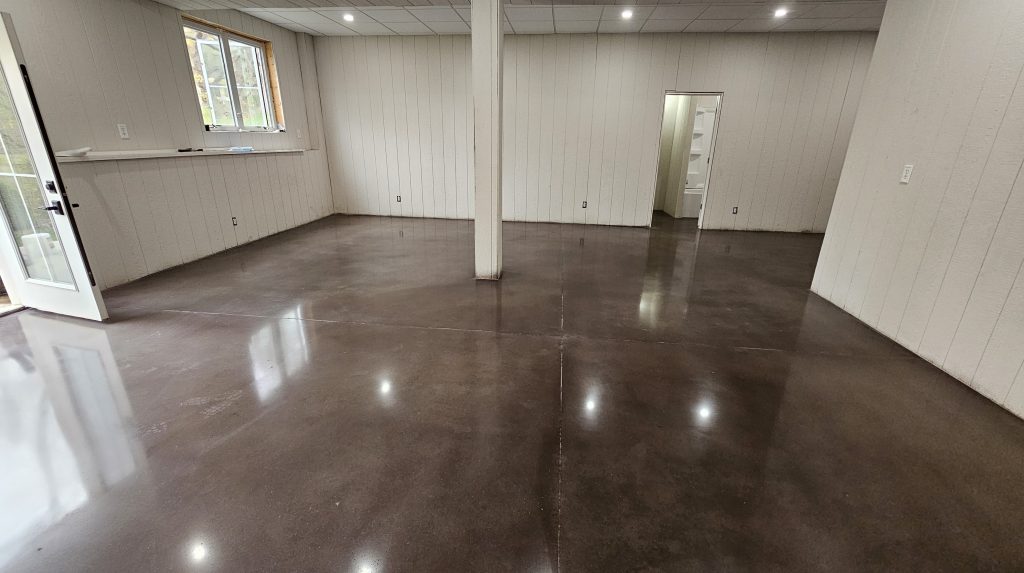
This guide covers the best flooring options for every zone of a Kansas City restaurant — from the commercial kitchen and prep areas to the dining room, bar, and customer entrance.
Restaurant Flooring Requirements in Kansas City
Kansas City area restaurants must comply with multiple overlapping regulatory frameworks governing floor surfaces:
- Kansas Department of Agriculture (KDA) — food service facility floor requirements: surfaces must be smooth, durable, easily cleanable, and non-absorbent in all food-contact and wet areas
- FDA Food Safety Modernization Act (FSMA) — floor surface standards for food processing facilities
- OSHA 29 CFR 1910.22 — slip resistance for walking-working surfaces (DCOF ≥ 0.42)
- ADA Accessibility Guidelines — floor surface firmness and stability, slip resistance at accessible routes
- Johnson County Environmental Health — inspection compliance for Overland Park, Lenexa, Olathe, and Shawnee restaurants
Best Flooring Systems for Each Restaurant Zone
| Restaurant Zone | Key Requirements | Recommended System | Cost/Sq Ft |
|---|---|---|---|
| Commercial Kitchen | Slip-resist, chemical-resist, FDA-compliant | Quartz broadcast epoxy or urethane concrete | $7–$14 |
| Prep Areas | Seamless, hygienic, cleanable | Self-leveling epoxy or urethane concrete | $6–$12 |
| Walk-in Cooler/Freezer | Temperature resistance, anti-slip | Urethane concrete or MMA epoxy | $10–$18 |
| Dishwashing Area | Hot water/steam resistance, slip-resist | Urethane concrete or quartz epoxy | $8–$15 |
| Dining Room | Aesthetic, durable, brand-aligned | Polished concrete or dye polish | $5–$9 |
| Bar Area | Spill-resistant, attractive, easy clean | Metallic epoxy or polished concrete | $6–$12 |
| Entrance/Lobby | Durable, attractive, slip-resistant | Polished concrete or stained concrete | $4–$8 |
| Outdoor Patio | Weather-resistant, slip-resistant | Stamped overlay or quartz epoxy | $5–$10 |
Why Quartz Broadcast Epoxy Is the Standard for Kansas City Commercial Kitchens
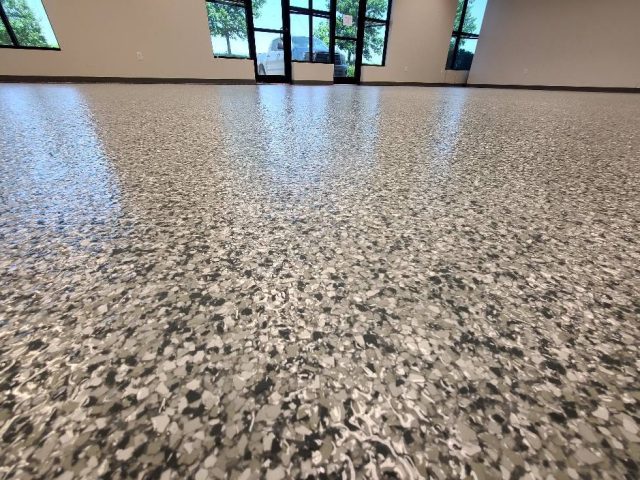
Quartz broadcast epoxy systems — a multi-coat epoxy with a full or partial broadcast of quartz aggregate sealed under a polyurethane or polyaspartic topcoat — are the most widely specified commercial kitchen flooring system in Kansas City for good reason:
- The quartz aggregate creates inherent slip resistance (DCOF >0.60) that exceeds OSHA and health department requirements
- The seamless system has no grout lines where bacteria can harbor — critical for passing KDA inspections
- Resistant to hot cooking oils, grease, cleaning chemicals, and acidic food products
- The bright, reflective surface improves kitchen visibility and sanitation monitoring
- Integral epoxy cove base eliminates the floor-to-wall joint where pests and bacteria congregate
- Easily cleaned with standard commercial kitchen cleaning protocols
Urethane Concrete: The Premium Choice for Kansas City Restaurant Kitchens
For Kansas City restaurants with intense thermal cycling — steam equipment, commercial dishwashers, pressure washing — urethane concrete is the superior system. Standard epoxy fails under repeated thermal shock; urethane concrete is specifically engineered for this environment. It also provides superior resistance to organic acids from food products that can degrade epoxy over time.
Investment: $10–$20/sq ft installed. Justified by the dramatically longer service life and elimination of the costly floor failure and replacement cycle that plagues restaurant owners using standard epoxy systems.
Dining Room Flooring: Polished Concrete as a Restaurant Design Statement
Kansas City’s restaurant scene has increasingly embraced polished concrete as a design-forward, low-maintenance dining room floor. From the farm-to-table restaurants in the Crossroads Arts District to upscale steakhouses in Leawood and fast-casual concepts in Overland Park, polished concrete offers:
- A neutral, sophisticated backdrop that works with virtually any interior design aesthetic
- Zero maintenance schedule — no waxing, no stripping, no recoating on any regular cycle
- Exceptional durability under chair legs, high heels, and heavy restaurant traffic
- The ability to incorporate brand colors through dye polishing
- Seamless surface with no grout lines — cleaner appearance and easier maintenance
Restaurant Floor Installation: Minimizing Business Disruption
Every restaurant operator’s greatest fear is lost revenue from extended downtime. High Stakes Epoxy LLC’s commercial restaurant team is experienced at working around restaurant schedules:
- Evening/overnight installation on occupied dining room areas
- Weekend installation during full or partial restaurant closures
- Phased installation — kitchen in phase 1, dining room in phase 2 — maintaining partial operations
- Polyaspartic topcoat systems for commercial kitchens allow foot traffic return in 4–6 hours
- Complete written timeline provided before project commencement
Restaurant Flooring Cost Guide — Kansas City
| Project Type | System | Estimated Total |
|---|---|---|
| Small Restaurant Kitchen (500 sq ft) | Quartz Epoxy + Cove Base | $4,500–$8,500 |
| Mid-Size Kitchen + Prep (1,500 sq ft) | Urethane Concrete or Quartz Epoxy | $15,000–$30,000 |
| Large Commercial Kitchen (3,000+ sq ft) | Urethane Concrete | $30,000–$60,000+ |
| Dining Room Only (1,000 sq ft) | Polished Concrete | $5,000–$9,000 |
| Full Restaurant (Kitchen + Dining) | Combined system | $20,000–$80,000+ |
| Outdoor Patio (500 sq ft) | Stamped Overlay or Quartz Epoxy | $3,500–$8,000 |
Project Showcase: Restaurant Flooring in Kansas City
Westport Neighborhood Restaurant — Urethane Concrete Kitchen + Polished Concrete Dining
A popular farm-to-table restaurant in Kansas City’s Westport neighborhood selected a split-zone system: urethane concrete in the commercial kitchen and prep areas, and a 1500 grit polished concrete with warm dye tones in the dining room. The project was completed over a four-day closure. The combination of FDA-compliant kitchen flooring and design-forward dining room flooring positioned the restaurant perfectly for their 2025 health inspection cycle.
Overland Park Fast-Casual Chain — 12-Location Quartz Epoxy Rollout
A regional fast-casual restaurant chain with multiple Overland Park and Johnson County locations selected High Stakes Epoxy LLC to standardize their commercial kitchen flooring across 12 locations. The consistent quartz broadcast epoxy specification ensured franchise compliance and simplified maintenance training. We completed all 12 locations over a six-month period, working around individual restaurant schedules.
| 🍽️ Upgrade Your Kansas City Restaurant Floor — Get a FREE Flooring Assessment from High Stakes Epoxy LLC! |
|---|
FAQ — Restaurant Flooring Kansas City
Q: What floors do Kansas City health departments require for commercial kitchens?
A: The Kansas Department of Agriculture requires food service facility floors to be smooth, non-absorbent, durable, and easily cleanable. Quartz broadcast epoxy and urethane concrete both meet these requirements and are standard in passing KDA inspections throughout Kansas City, Overland Park, and Johnson County.
Q: How long does a commercial kitchen floor last in Kansas City?
A: A properly installed quartz epoxy system lasts 8–15 years in a commercial kitchen with daily cleaning. Urethane concrete lasts 15–25+ years in high-washdown environments. The key variable is preparation — inadequately prepared concrete leads to delamination failures within 2–3 years.
Q: Can restaurant flooring be installed overnight in Kansas City?
A: Yes. We specialize in off-hours restaurant flooring installation in Kansas City. Polyaspartic topcoat systems allow light foot traffic return in 4–6 hours. Most commercial kitchen recoat projects can be completed in a single overnight closure (10 pm–6 am window) for smaller kitchen areas.
See more of our work on the High Stakes Epoxy website.