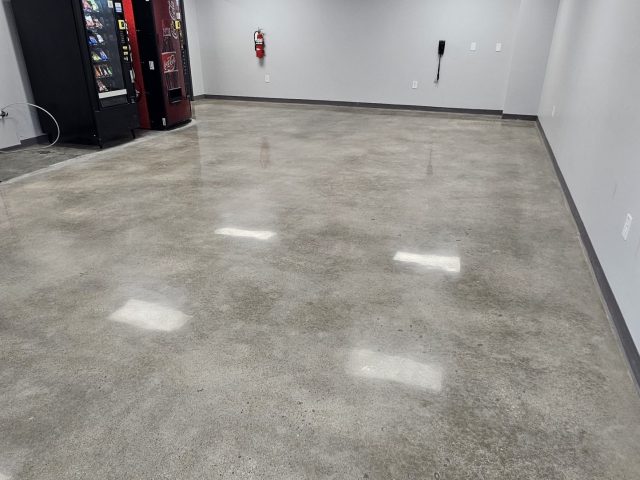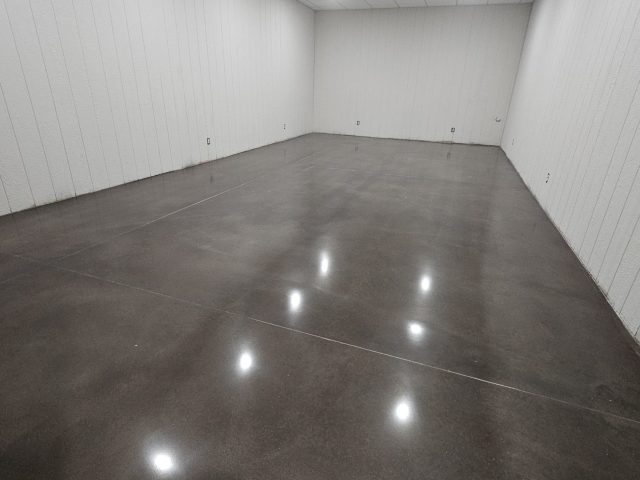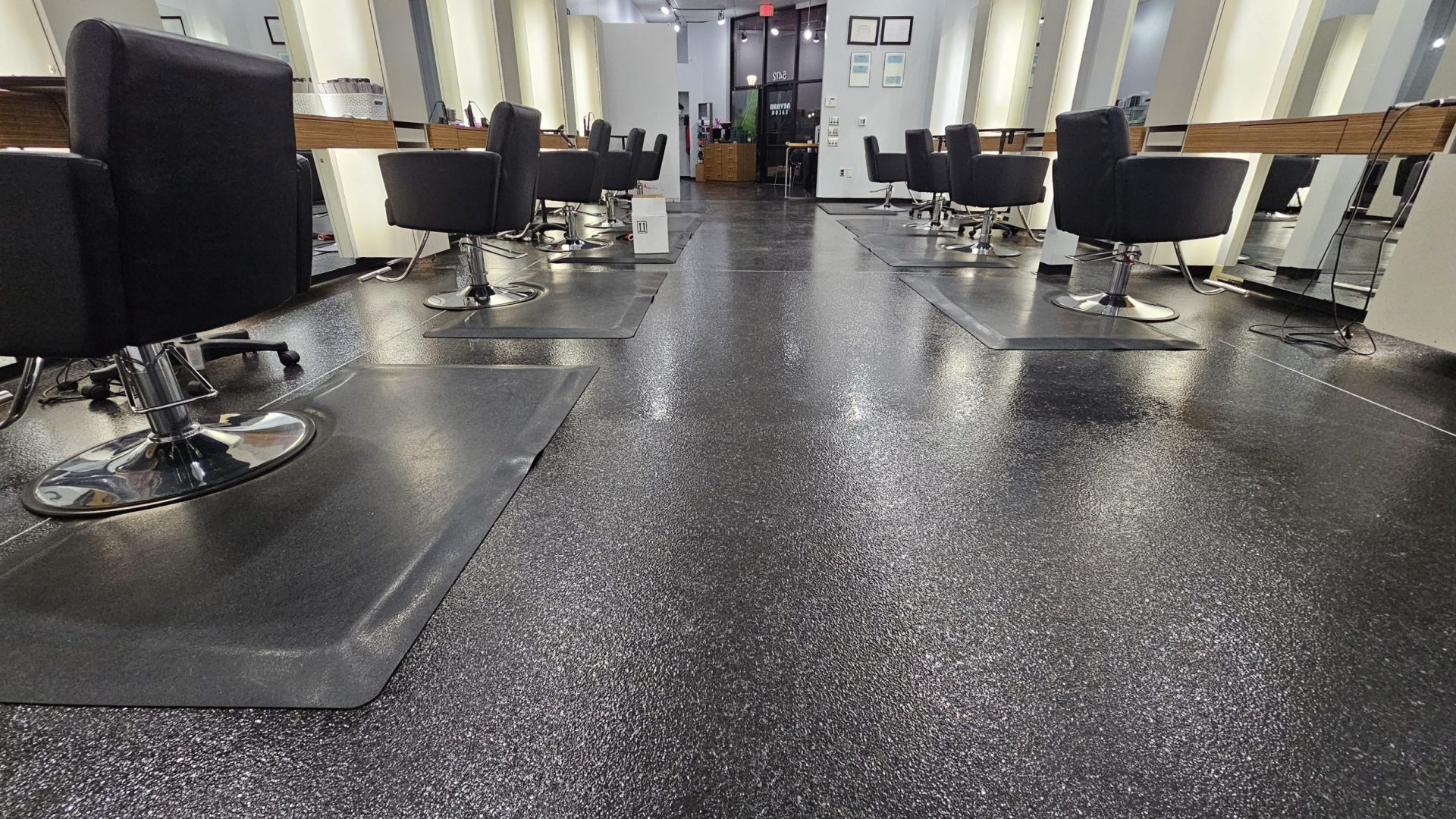
Walk into a Target, a boutique in the Crossroads Arts District, or a national home goods retailer at Oak Park Mall, and you will notice the same design choice appearing with increasing frequency: polished concrete floors. What began as an industrial aesthetic borrowed from warehouse lofts has become a mainstream retail specification across Kansas City, driven not by trend-chasing but by hard financial logic. Polished concrete costs less to maintain than almost any competing system, looks premium at a fraction of the cost of stone or large-format tile, and lasts two to three times longer than VCT. This guide explains what Kansas City retailers need to know before their next flooring decision.
The Business Case for Polished Concrete in Retail Environments
Retail facility managers and property owners in the Kansas City metro face a common problem: high foot traffic degrades flooring systems faster than the maintenance budget can keep up. VCT tiles chip, discolor, and require continuous stripping and waxing — a process that demands store closures or after-hours labor at premium rates. Carpet in soft goods or fitting room areas stains permanently and requires replacement every 5–7 years. Polished concrete eliminates the stripping, waxing, and replacement cycles entirely.
The aesthetic argument is equally compelling. Modern retail design in Kansas City favors clean, open floor planes that allow merchandise to dominate the visual field. A Level 3 or 4 polished concrete floor — matte to high-gloss depending on brand direction — provides a neutral, sophisticated background that works with virtually every retail vertical from athleisure to home furnishings to automotive accessories.
Retail Flooring Cost and Lifetime Comparison
| Flooring Type | Installation Cost | 10-Year Maintenance | 10-Year Total | Lifespan | Replacement Cycle |
|---|---|---|---|---|---|
| Polished Concrete (Level 3) | $3.50 – $6 / sq ft | $0.80 – $1.50 / sq ft | $4.30 – $7.50 | 20–30 years | None for 20+ years |
| VCT (Vinyl Composite Tile) | $2 – $3.50 / sq ft | $6 – $12 / sq ft | $8 – $15.50 | 7–10 years | Every 7–10 years |
| LVT (Luxury Vinyl Tile) | $3 – $6 / sq ft | $2 – $4 / sq ft | $5 – $10 | 10–15 years | Every 10–15 years |
| Ceramic / Porcelain Tile | $6 – $14 / sq ft | $0.50 – $1 / sq ft | $6.50 – $15 | 20+ years | Grout replacement 10 yrs |
Kansas City Retail-Specific Considerations
Kansas City retail properties span a wide range of building vintages, from 1970s strip centers along Shawnee Mission Parkway to new construction in the Lenexa City Center and the Village West retail corridor. Older slab construction often presents moisture and surface contamination challenges that require thorough preparation before polishing. High Stakes Epoxy performs MVER testing on all KC retail projects and includes remediation of moisture issues in the project scope — avoiding the delamination failures that result from coating a slab before it is ready.
Retail environments also have specific requirements for gloss level consistency across large open floor plates. High Stakes Epoxy uses calibrated grit-sequence polishing with a final cream-cut stage to ensure the floor reads as visually consistent from the front door to the back wall — a detail that matters for brand standards in franchise and national retail environments.
Maintenance: What Kansas City Retail Staff Actually Need to Do
Polished concrete maintenance is simpler than any competing hard-surface system. Daily: dust mop or auto-scrub with a microfiber pad. Weekly: damp mop with a neutral pH retail floor cleaner. Quarterly: high-speed burnish with a 1,500+ RPM machine to restore gloss. Annually: re-apply penetrating guard treatment. That is the complete maintenance protocol. No stripping, no waxing, no tile replacement, no grout cleaning. For a 10,000 sq ft retail floor, switching from VCT to polished concrete typically saves $15,000–$40,000 in maintenance labor over 10 years.
Frequently Asked Questions: Polished Concrete for KC Retail
Is polished concrete slippery in a retail store?
A properly finished polished concrete floor with a penetrating guard treatment meets or exceeds OSHA slip resistance standards (COF above 0.5). In wet-entry conditions near doors, a slip-resistant mat and a matte finish specification (Level 2 or 3 rather than Level 4) at entry zones is recommended. High-gloss polished concrete near exterior entrances without weather protection is not advisable in Kansas City’s wet winters.
Can polished concrete be done in sections to keep the store open?
Yes. For operational retail stores, High Stakes Epoxy sequences polishing work by section, using temporary barriers. A typical 10,000 sq ft retail floor can be polished over a long weekend or in 5–7 evening/overnight sessions, keeping the store operational during business hours.
What gloss level is right for my Kansas City retail store?
Level 2 (matte/satin) suits industrial-chic, hardware, or grocery retail environments. Level 3 (semi-gloss) is the most versatile and popular choice for general retail. Level 4 (high-gloss) works well for flagship showrooms, jewelry, and high-end apparel. High Stakes Epoxy can provide sample panels at your location before committing to a gloss level.
Will polished concrete work over my existing VCT without removing it?
No. VCT and its adhesive must be fully removed before polishing the concrete substrate. The removal process adds $0.50–$1.50/sq ft to the project cost depending on adhesive type, but polishing directly over adhesive residue or tile is not a viable system and will fail prematurely.
How does polished concrete handle high heel traffic in retail?
Polished concrete is resistant to stiletto heel point loads in normal retail volumes. Extreme concentrated loads (dance floors, for example) can cause micro-pitting over time, but standard retail traffic — even in a busy Kansas City mall anchor — does not materially affect a properly specified polished concrete floor.
See more of our work on the High Stakes Epoxy website.