Kansas City’s commercial building stock includes thousands of structures built between the 1960s and 1990s with concrete floors that are now showing their age: surface scaling, control joint deterioration, oil and chemical staining, uneven areas from settled slabs, and the accumulated wear of 30 to 50 years of commercial use. The traditional response — tear out and replace — is expensive, disruptive, and often unnecessary. Concrete overlay systems allow building owners, property managers, and tenants to restore or completely transform aging concrete floors at 30 to 60 percent of the cost of full replacement, with minimal downtime and a dramatically improved result. This guide covers the overlay systems High Stakes Epoxy LLC installs across Kansas City and helps commercial clients choose the right approach for their specific situation.
When Is Overlay the Right Choice vs. Replacement?
Overlay is appropriate when the underlying concrete is structurally sound but cosmetically compromised or when the surface is worn but not actively failing. High Stakes Epoxy’s pre-installation evaluation assesses three criteria: structural integrity (no active settlement, no through-cracks from structural movement), moisture vapor emission rate (high MVE can cause overlay delamination), and surface cleanliness (contamination from oil, grease, or curing compounds must be fully removed before overlay bonding). When these three conditions are met, overlay almost always delivers superior value to replacement.
Replacement is necessary when the slab has significant structural movement (differential settlement greater than 1/4 inch), when the concrete has carbonated or spalled to the point of losing structural depth, or when the building’s use has changed in a way that requires a higher load-bearing specification than the existing slab supports. For the majority of aging commercial floors in Kansas City office buildings, retail centers, warehouses, and institutional facilities, overlay is the correct answer.
Commercial Concrete Overlay System Comparison
| System | Thickness | Best Application | Cost / sq ft | Lifespan | Key Feature |
|---|---|---|---|---|---|
| Microtopping (skim coat) | 1/16″ – 1/8″ | Cosmetic renewal, light traffic | $4 – $7 | 10 – 15 years | Thinnest profile, maximum design flexibility |
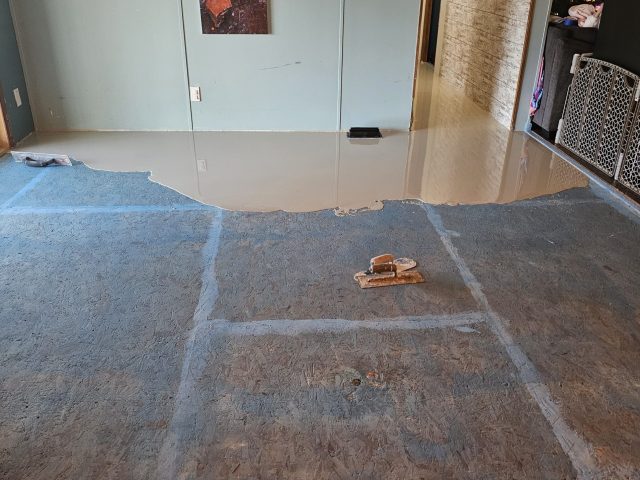
| Self-Leveling Overlay | 1/4″ – 3/8″ | Uneven floors, moderate traffic | $5 – $9 | 15 – 20 years | Levels out minor unevenness |
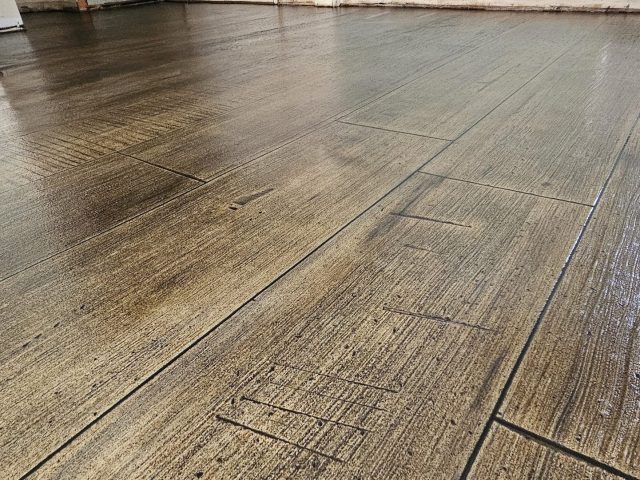
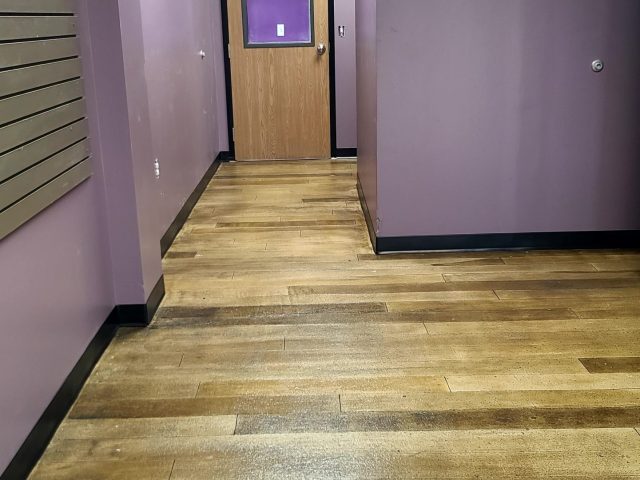
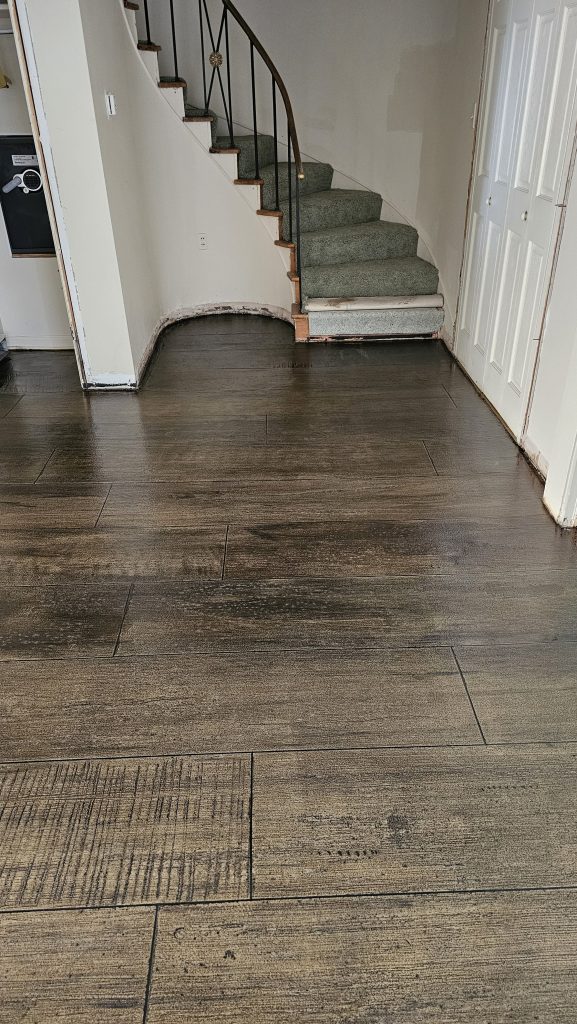
| Stampable Overlay | 3/8″ – 1/2″ | Decorative finish, retail/hospitality | $6 – $10 | 10 – 20 years | Tile/stone appearance at fraction of the cost |
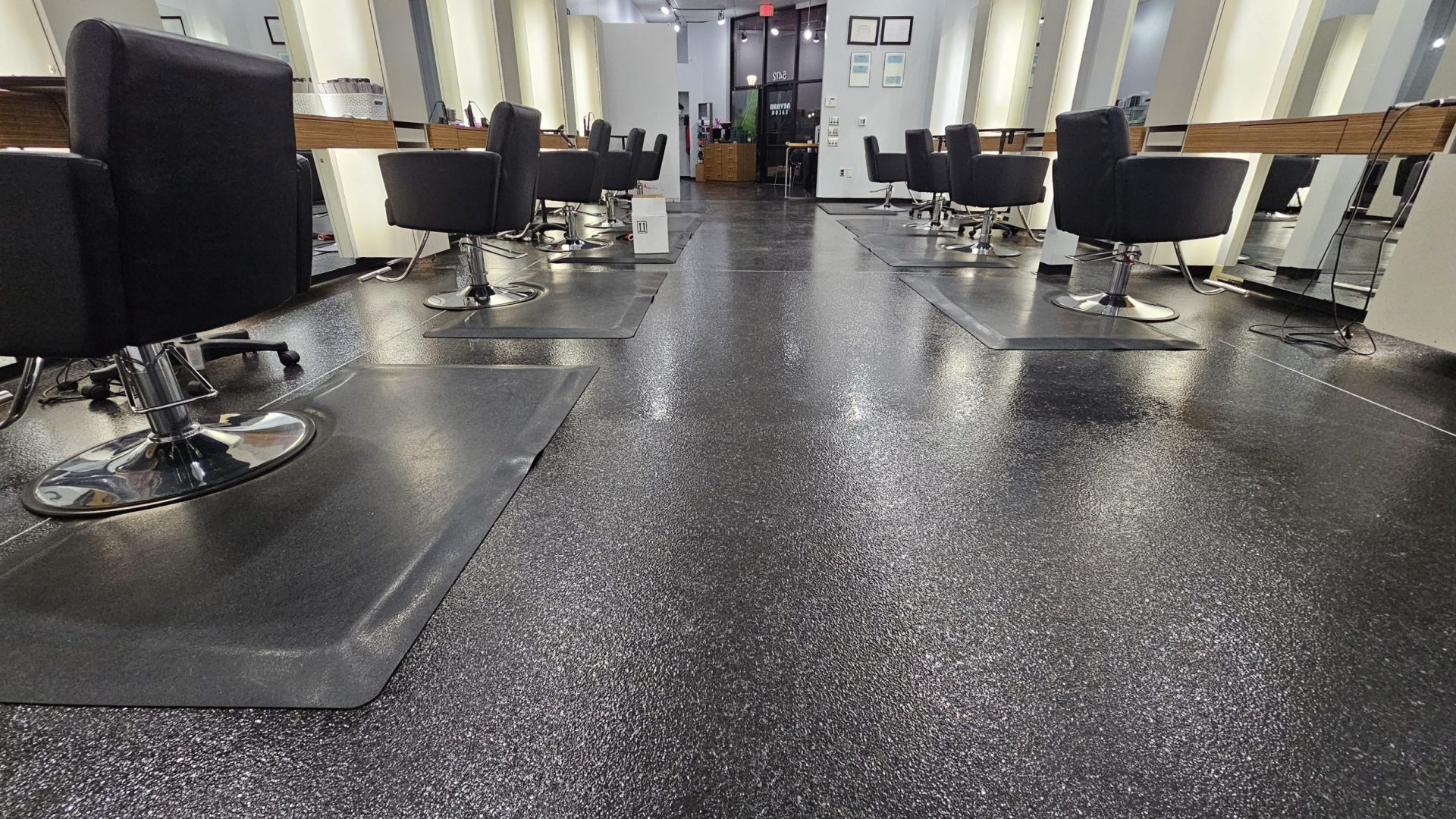
| Resurface & Polish | 1/8″ – 1/4″ | Commercial floors needing level + gloss | $5 – $8 | 15 – 25 years | Overlay then polished for high-end result |
| Epoxy Mortar (repair-grade) | 1/4″ – 1″ | Deep repairs before topcoat | $8 – $15 | 10 – 20 years | Fills spalls, joints, craters before overlay |
Cost Savings vs. Full Concrete Replacement in Kansas City
Full concrete removal and replacement in a Kansas City commercial building costs $8–$18 per square foot including demolition, disposal, forming, pouring, and finishing — and that is before accounting for business disruption, temporary relocation, and utility work. A self-leveling overlay with a polished finish runs $6–$10 per square foot and can be completed in 2–4 days for a 5,000 sq ft floor. The savings are significant; on a 20,000 sq ft commercial floor, overlay versus replacement often represents $160,000–$360,000 in avoided capital expenditure.
Property managers in the Kansas City suburban office and retail markets are increasingly specifying overlay for tenant improvement allowances — delivering a high-quality floor finish that appeals to prospective tenants without the cost or timeline of replacement.
The Importance of Surface Preparation for Kansas City Overlays
Overlay bonding failures in Kansas City commercial buildings are almost always a preparation failure, not a product failure. The common causes are: contamination left on the surface from previous coatings or sealers, inadequate mechanical profile (concrete must be shot-blasted or diamond-ground to a CSP 3–4 profile for most overlays), and moisture vapor that was not tested before application. High Stakes Epoxy’s overlay specifications include a written surface prep protocol and photographic documentation of the prepared surface before any overlay material is applied — providing a defensible record in the rare event of a warranty claim.
Frequently Asked Questions: Concrete Overlay for Kansas City Commercial Buildings
Can concrete overlay cover cracks in my Kansas City commercial floor?
Hairline cracks (under 1/16″) can be covered with a properly installed overlay system using a crack bridging membrane. Structural cracks (those that move or are wider than 1/8″) must be routed, cleaned, and filled with a semi-rigid polyurea before overlay application; overlay alone will not stop a moving crack from reflective cracking through the new surface.
How thick is a commercial concrete overlay?
Commercial overlay thickness ranges from 1/16″ for a skim-coat microtopping to 3/4″ for a deep self-leveling repair overlay. The appropriate thickness depends on the condition of the existing floor, the degree of leveling required, and the performance demands of the new surface. High Stakes Epoxy selects overlay thickness during the site evaluation phase.
How long does a commercial overlay installation take in Kansas City?
A 5,000–10,000 sq ft self-leveling overlay project in Kansas City typically takes 3–5 days from surface prep through final topcoat. Business operations can often resume within 24–48 hours of final coat application for light traffic and 72 hours for normal commercial traffic.
Is concrete overlay durable enough for a high-traffic Kansas City commercial floor?
A properly specified and installed concrete overlay — particularly a resurface-and-polish or a stamped overlay with an epoxy or urethane sealer — is as durable as many new concrete installations. The key performance variables are substrate quality, overlay thickness, and topcoat selection. High Stakes Epoxy specifies the topcoat system (penetrating sealer, epoxy, or urethane) based on the specific traffic and chemical exposure of each KC commercial application.
What is the warranty on commercial concrete overlay in Kansas City?
High Stakes Epoxy provides a written workmanship warranty on all overlay installations. Material warranties vary by manufacturer and system; most commercial-grade overlay products carry 5- to 10-year material warranties. System performance warranties are conditioned on the maintenance protocol being followed as specified.
See more of our work on the High Stakes Epoxy website.