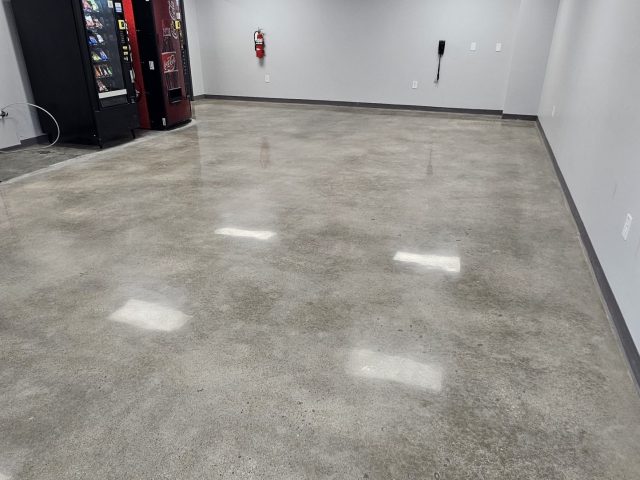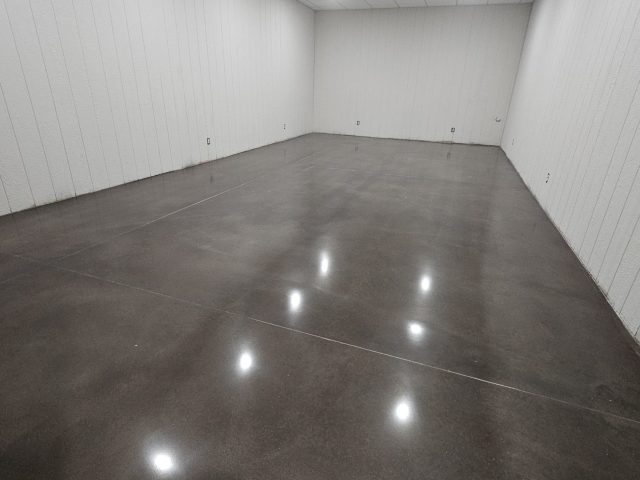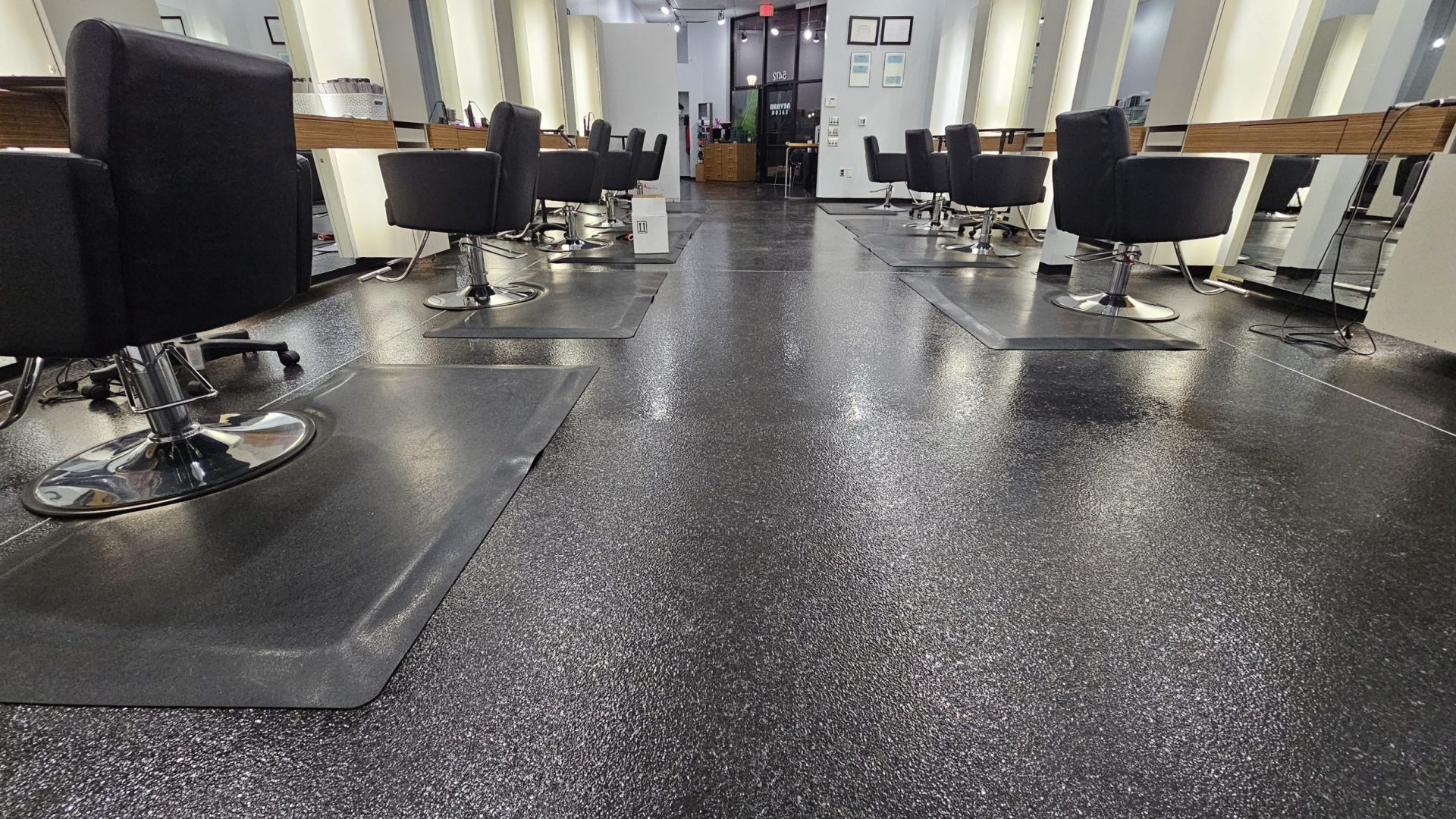
One of the biggest advantages of polished concrete is how little maintenance it needs — but a simple routine keeps it glossy and protected for decades. Whether you manage a Kansas City warehouse or have a polished floor at home, the care is the same and refreshingly easy. Here is the routine High Stakes Epoxy recommends to clients.
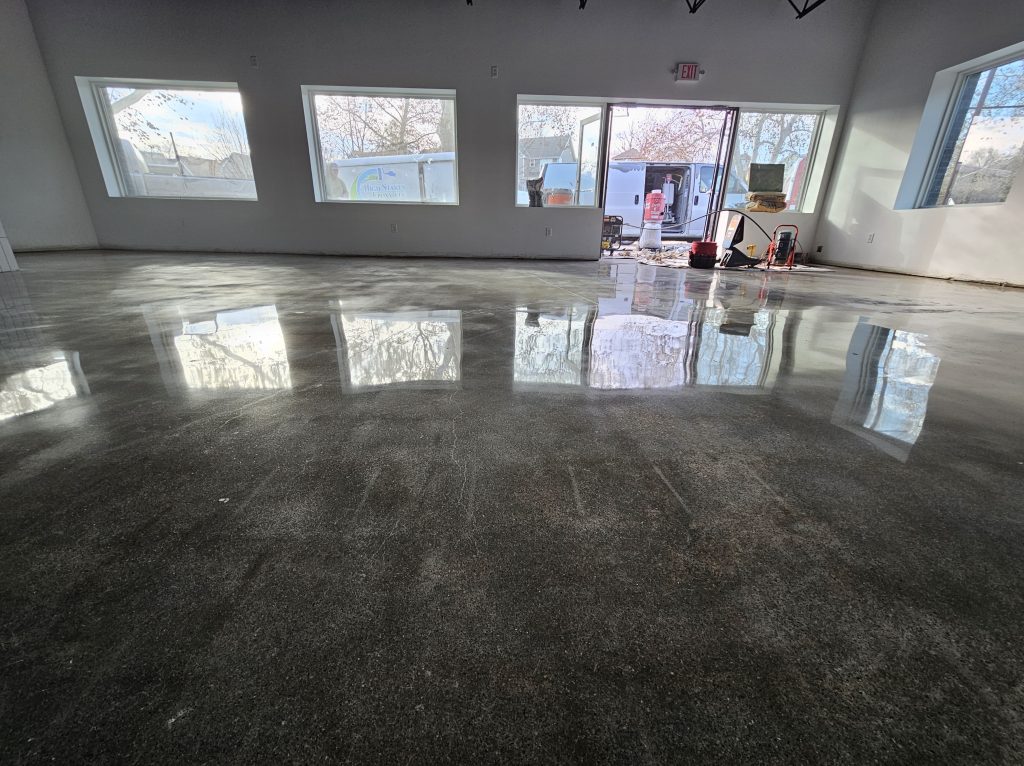
No wax, no stripping, no harsh chemicals. Just consistent, gentle cleaning.
Daily Care
Dust mop or use a microfiber pad to remove grit, which is the main cause of gloss loss. In commercial settings, a daily auto-scrubber pass with clean water keeps lanes bright.
Weekly Care
Damp mop with a pH-neutral cleaner. Avoid acidic or alkaline products, which can etch the densified surface and dull the shine.
Long-Term Care
| Interval | Task |
|---|---|
| Every 1 – 3 years | Burnish or maintenance polish high-traffic lanes |
| As needed | Reapply a polish guard / conditioner to restore sheen |
| Every several years | Re-run top grits for a full gloss restoration |
What to Avoid
Skip acidic cleaners (vinegar, citrus), abrasive pads, and standing water for long periods. Use felt pads under furniture and equipment, and run an entrance-mat program to trap grit before it reaches the floor.
Why Maintenance Is So Easy
Because the surface is densified concrete rather than a coating, there is no film to protect, strip, or recoat. The floor is renewed by polishing, not by chemical refinishing, which keeps both effort and cost low.
Frequently Asked Questions
What cleaner should I use?
A pH-neutral floor cleaner and clean water. That is all most floors ever need.
How do I restore lost shine?
Burnishing or a maintenance polish brings back the gloss. For heavily worn lanes, re-running the top grits fully restores it.
Do I need to seal polished concrete?
No topical sealer is required. A polish guard can be applied to enhance stain resistance and sheen, but the densifier already hardens the surface.
See more of our work on the High Stakes Epoxy website.