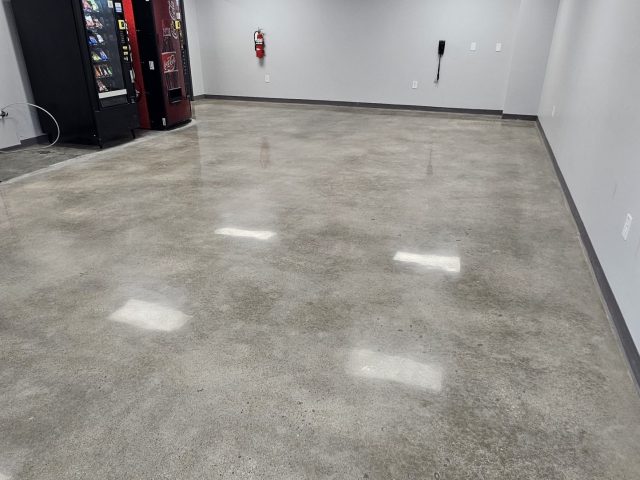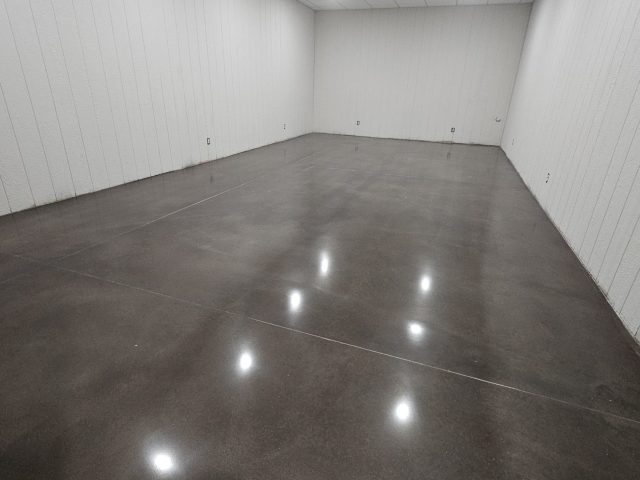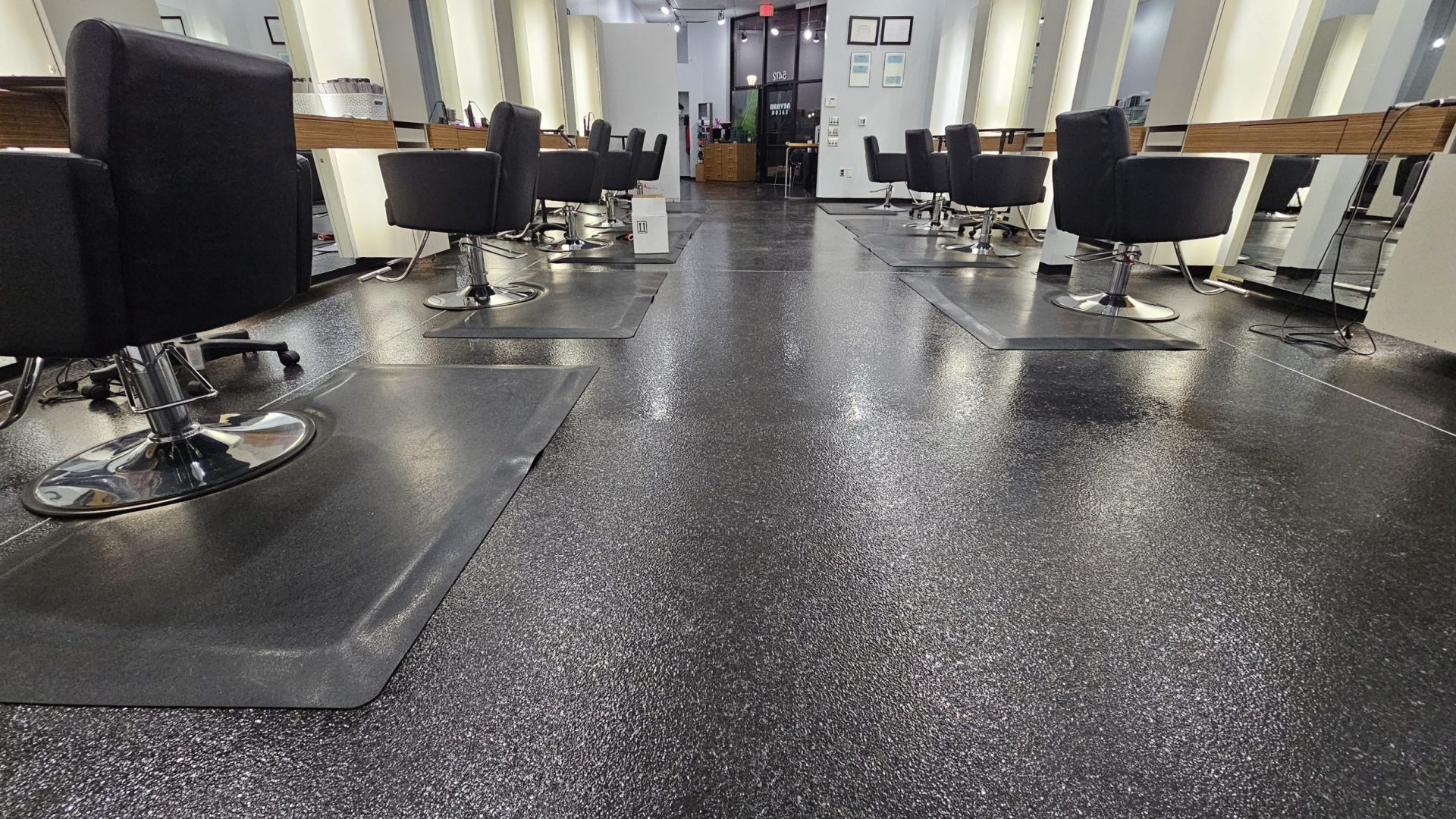
Choosing the right warehouse flooring in Kansas City is one of the most consequential decisions a facility manager or property owner will make. The wrong choice leads to premature failure, costly repairs, safety violations, and operational downtime. The right choice delivers decades of durability, reduced housekeeping costs, improved worker safety, and a professional environment that supports your business operations. High Stakes Epoxy LLC has installed flooring in warehouses, distribution centers, fulfillment facilities, and logistics hubs throughout Kansas City, KS — including the rapidly growing industrial corridors in Lenexa, Olathe, Gardner, and Edwardsville.
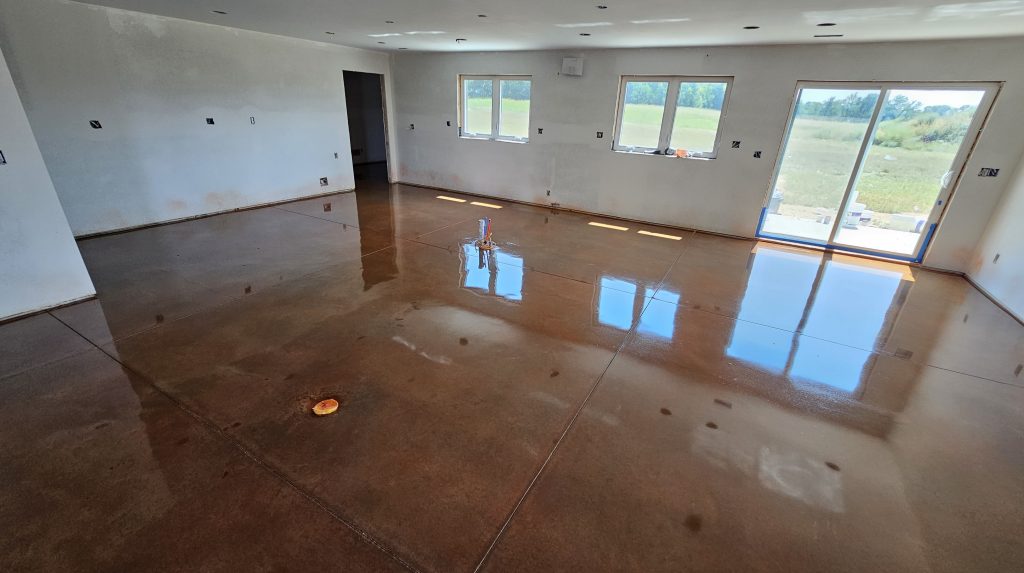
This guide covers the top flooring systems for Kansas City warehouses, what drives performance in an industrial environment, cost breakdowns, and real-world project examples from across the metro area.
What Makes Warehouse Flooring Different from Other Commercial Flooring?
Warehouse and distribution center floors face demands that simply don’t exist in retail, office, or residential environments:
- Forklift and pallet jack traffic — repeated heavy wheel loads that can crack or delaminate inadequate coatings
- Point loading from racking systems — concentrated loads of 10,000–50,000 lbs per post
- Abrasion from steel and polyurethane forklift tires
- Chemical exposure — hydraulic fluid, fuel, lubricants, cleaning agents
- Thermal cycling — dock doors opening to Kansas City winters and summers
- Dust control — concrete dusting creates contamination issues for packaged goods
- Safety markings — OSHA-compliant aisle striping and hazard markings
- Large square footage — cost per square foot matters enormously at scale
Top Warehouse Flooring Options for Kansas City Facilities
Option 1: Densified & Sealed Concrete (Grind & Seal)
For most Kansas City warehouses and distribution centers, a properly executed grind and seal system delivers the best balance of cost, durability, and performance. The process involves diamond grinding the slab to remove laitance and surface contamination, applying a lithium silicate densifier/hardener, and finishing with a penetrating sealer or topcoat appropriate for the traffic level.
Benefits for Kansas City warehouses: eliminates concrete dusting, hardens the surface to resist abrasion, easy to clean, cost-effective at large square footage, LEED-contributing. Cost: $2.50–$5.50/sq ft installed.
Option 2: Polished Concrete
Polished concrete is the premium option for Kansas City distribution centers and logistics facilities where appearance, lighting efficiency, and very long service life are priorities. The mechanically polished surface is the hardest, most abrasion-resistant finish available — with no topcoat to peel or reapply. Modern high-bay distribution facilities in the Kansas City metro area increasingly specify polished concrete for its LEED contribution, light reflectance, and 20–30+ year service life.
Cost: $4.00–$8.00/sq ft installed. Higher upfront cost is offset by elimination of the maintenance and recoating cycle.
Option 3: Epoxy Coating System
100% solids epoxy coating systems are the right choice for Kansas City warehouses with specific performance requirements: food-grade environments, chemical storage areas, pharmaceutical facilities, or spaces where color-coded floor zones are required. Epoxy provides a defined topcoat that delivers exceptional chemical resistance, seamless hygiene, and the ability to incorporate safety markings and color zones directly into the floor system.
Cost: $3.50–$8.00/sq ft depending on system specification (standard coat vs. mortar system for heavy industrial).
Option 4: OSHA Line Marking & Safety Striping
Regardless of the base flooring system, OSHA 1910.22 requires warehouse floors to have clearly marked pedestrian traffic lanes, equipment operating zones, and hazard areas. High Stakes Epoxy LLC installs OSHA-compliant line striping, safety symbols, and colored floor zone markings using epoxy or polyurea paint — compatible with all flooring systems. Cost: $0.50–$2.00/linear foot.
Warehouse Flooring Cost Comparison — Kansas City Market
| System | Cost/Sq Ft | Lifespan | Maintenance | Best For |
|---|---|---|---|---|
| Grind & Seal | $2.50–$5.50 | 10–20 yrs | Low | Standard warehouses, large sq ft |
| Polished Concrete | $4.00–$8.00 | 20–40 yrs | Very Low | Distribution, logistics, LEED |
| Epoxy Coating | $3.50–$8.00 | 10–20 yrs | Low | Food-grade, chemical, zoned floors |
| Mortar Epoxy (Heavy) | $8.00–$18.00 | 15–25 yrs | Low | Heavy industrial, thermal shock |
| VCT (for comparison) | $2.00–$4.00 | 10–15 yrs | High (wax/strip) | Not recommended for warehouses |
| Polished + Dye | $5.00–$9.00 | 20–30 yrs | Very Low | Brand-aligned distribution centers |
OSHA Compliance & Safety Requirements for Kansas City Warehouse Floors
OSHA 29 CFR 1910.22 governs walking-working surfaces in all Kansas City commercial and industrial facilities. Key floor-related requirements include:
- Floors must be clean, dry (where practicable), and free of hazards
- Floor load limits must be conspicuously posted
- Aisles and passageways must be clearly marked — minimum 4-inch wide painted lines
- Floor surfaces must be slip-resistant — DCOF ≥ 0.42 for walking surfaces
- Drains and floor penetrations must be maintained in safe condition
High Stakes Epoxy LLC provides full OSHA compliance documentation including DCOF test results, product data sheets, and installation records for all Kansas City warehouse flooring projects.
Lighting Efficiency & Energy Savings for Kansas City Warehouses
A glossy or polished concrete floor in a Kansas City high-bay warehouse can reflect 70–80% of incident light (vs. 5–10% for dark, dirty concrete). For a 100,000 sq ft warehouse with 30-foot ceilings and high-bay lighting, this translates to a real, measurable reduction in lighting energy costs. Multiple Kansas City facility managers have reported 20–35% reduction in lighting energy consumption after upgrading from bare concrete to polished or sealed floors.
Dust Control: A Critical Issue in Kansas City Warehouses
Concrete dusting — the release of fine cement particles from an unsealed or deteriorated slab surface — is a persistent problem in Kansas City’s older warehouse stock. Dust contaminates packaged goods, clogs HVAC systems, reduces forklift visibility, and creates respiratory health concerns. A properly densified and sealed or polished concrete floor eliminates concrete dusting entirely. This is one of the most frequent reasons Kansas City distribution tenants commission flooring upgrades at lease commencement.
Project Showcase: Kansas City Warehouse Flooring
Lenexa E-Commerce Fulfillment Center — 110,000 Sq Ft Polished Concrete
A major e-commerce tenant relocating to a new Lenexa industrial park specified polished concrete for their 110,000 sq ft fulfillment center floor. The spec called for a full-aggregate-exposure Level 3 polish with lithium densifier and concrete guard. High Stakes Epoxy LLC completed the project in 12 days, working two shifts to meet the tenant’s pre-opening deadline. The polished floor improved the facility’s lighting efficiency and eliminated the dust contamination issues the tenant had experienced at their previous Kansas City location.
Gardner Distribution Warehouse — 65,000 Sq Ft Grind & Seal with Epoxy Zones
A national food distribution company leasing a new Gardner warehouse required a combination floor system: grind and seal for the primary storage and staging areas, and a 100% solids white epoxy system in the food-contact and sanitation zones. We phased the project over two weekends to avoid disrupting the tenant’s move-in schedule. OSHA-compliant aisle striping and pedestrian crosswalk markings were incorporated into the epoxy system.
How to Specify Warehouse Flooring for Your Kansas City Project
- Define the traffic type and load: electric forklifts vs. propane vs. manual jacks; light vs. heavy pallet loads
- Identify chemical exposure: food-grade requirements, petroleum products, cleaning agent pH
- Assess existing concrete condition: hardness, moisture, existing coatings, crack patterns
- Determine required slip resistance (DCOF) for specific zones
- Establish timeline constraints: new build vs. occupied space requiring phased installation
- Identify OSHA marking and safety zone requirements
- Request itemized written specifications from all bidding contractors — compare scope, not just price
| 📦 High Stakes Epoxy LLC — Kansas City’s Warehouse Flooring Specialist. Request Your FREE Facility Assessment Today! |
|---|
FAQ — Warehouse Flooring Kansas City
Q: How long does warehouse floor coating last in Kansas City?
A: With proper installation, a densified/sealed or polished concrete warehouse floor in Kansas City lasts 15–30+ years. Epoxy topcoat systems typically last 10–20 years before recoating is needed in high-traffic areas. Factors include forklift tire type, cleaning frequency, and chemical exposure.
Q: Can warehouse flooring be installed in phases without shutting down operations?
A: Yes — phased installation is standard practice for occupied Kansas City warehouses. We work section by section, maintaining access to operational areas throughout the project. Polyaspartic coating systems allow forklift traffic return in 24–48 hours for fast-paced facilities.
Q: What is the most cost-effective warehouse flooring for large Kansas City facilities?
A: For square footage over 50,000 sq ft, densified and sealed concrete (grind and seal) typically delivers the best cost-per-square-foot at $2.50–$4.00/sq ft installed. Polished concrete costs more upfront but eliminates the long-term maintenance and recoating expenses, making it the better lifetime value for 20+ year leases.
See more of our work on the High Stakes Epoxy website.