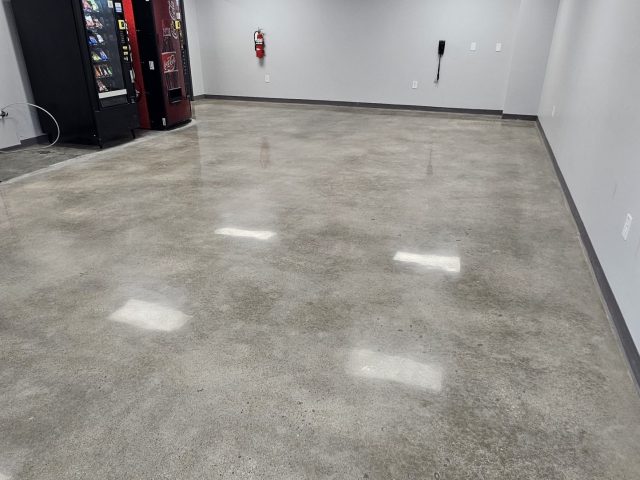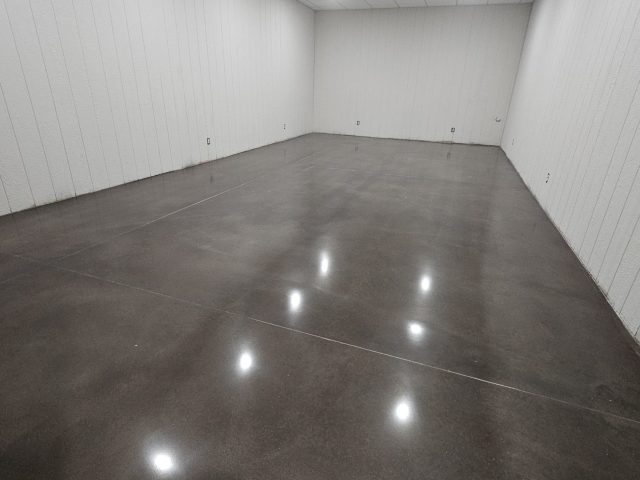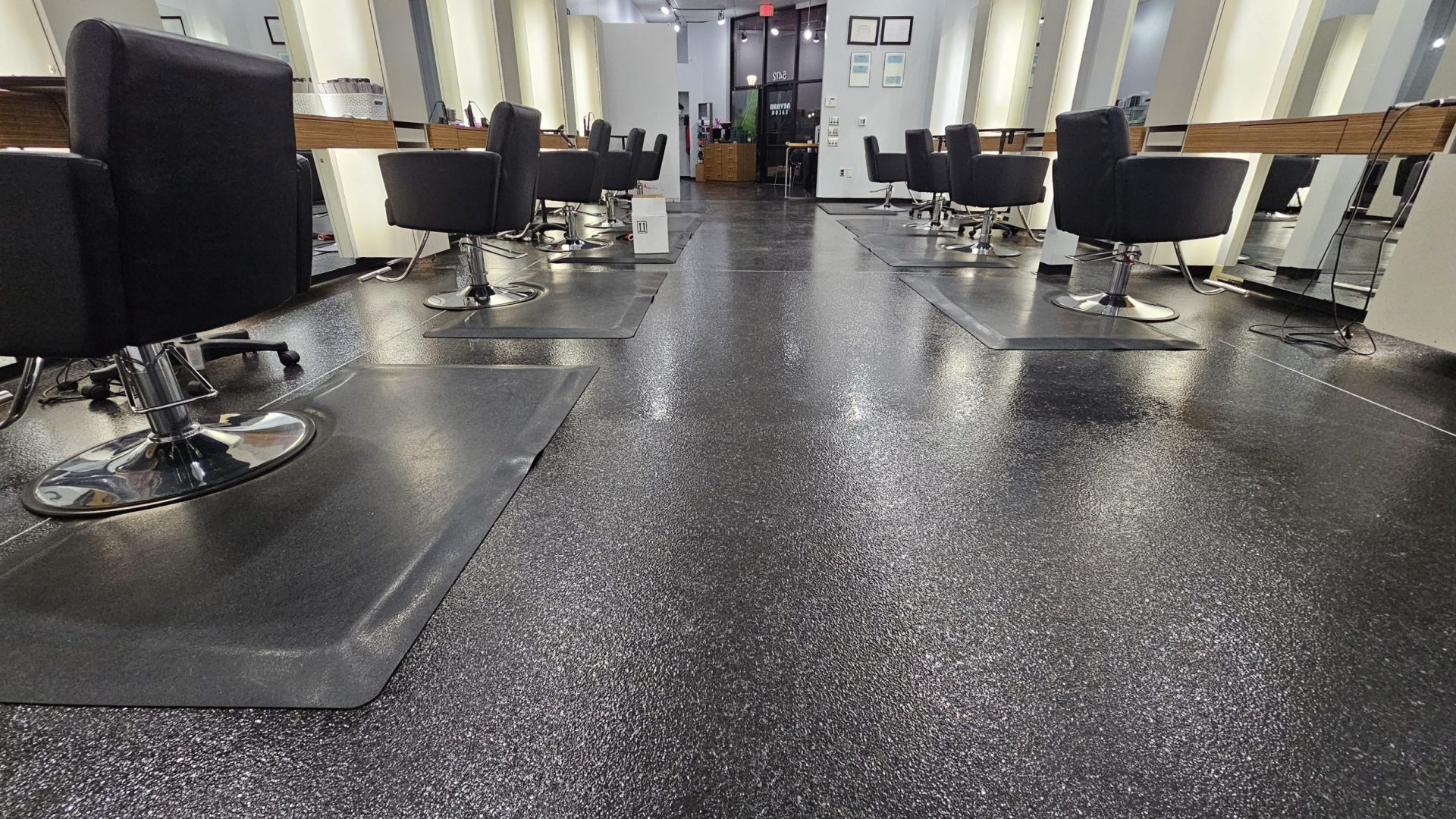
Walk into any top-performing auto dealership in the Kansas City metro — from the Johnson County luxury corridor to the Olathe volume dealers — and the floor tells you something about the brand before a single salesperson speaks. Polished concrete has become the standard specification for new dealership construction and showroom renovations in the KC market, and the reasons are as much financial as they are aesthetic. This guide covers everything a dealer principal or facilities director needs to know before making a flooring decision.
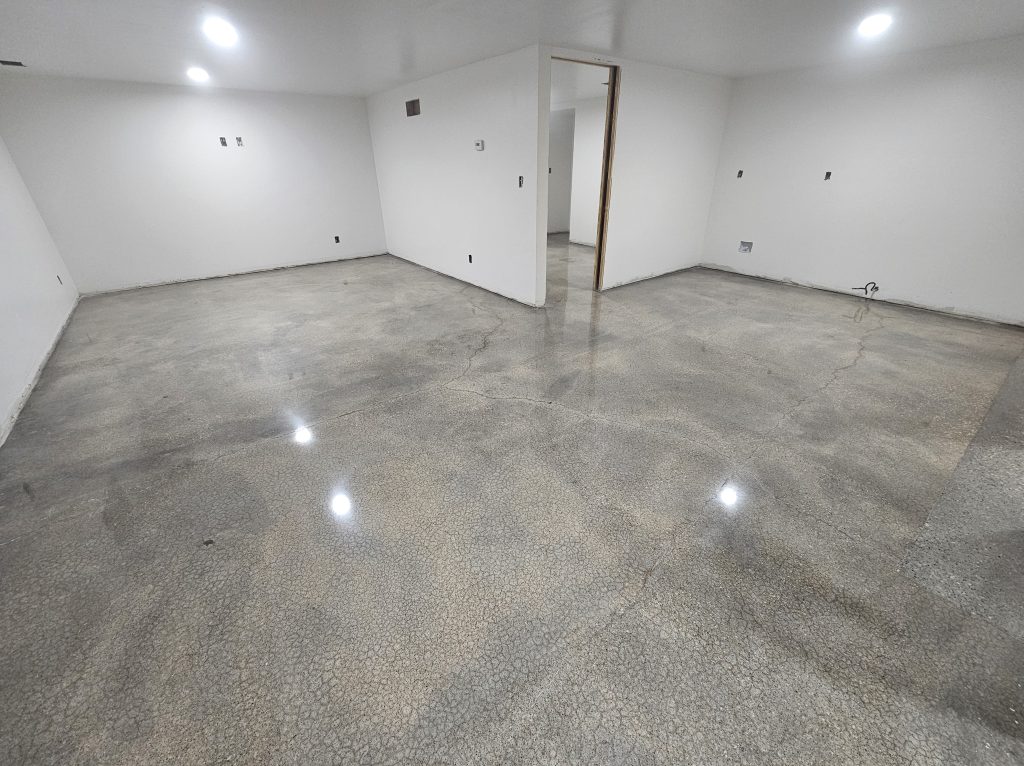
Why Auto Dealerships in Kansas City Are Moving to Polished Concrete
Traditional dealership floors — VCT tile, carpet in the showroom, sealed concrete in the service bay — create maintenance headaches and an inconsistent brand experience. VCT requires stripping, waxing, and buffing on a monthly or quarterly schedule; a single tire mark or chemical spill can permanently stain carpet. Polished concrete eliminates both problems. The surface is non-porous, resistant to tire rubber transfer and brake fluid, and can be wet-mopped clean in minutes.
The reflectivity factor matters significantly in a showroom environment. A Level 4 polished concrete floor with a high-gloss topcoat reflects vehicle lighting and overhead fixtures in a way that makes inventory look more premium — an intangible but real factor in customer perception and closing rates. Dealerships that have upgraded from VCT to polished concrete in the KC market consistently report that the floor becomes a selling point in itself.
Polished Concrete vs. Competing Systems for Dealership Showrooms
| Flooring System | Installed Cost | Gloss Level | Tire Mark Resistance | Chemical Resistance | Lifespan | Annual Maintenance Cost |
|---|---|---|---|---|---|---|
| Polished Concrete (Level 3–4) | $4 – $7 / sq ft | High | Excellent | Excellent | 20+ years | $0.15 – $0.30 / sq ft |
| VCT (Vinyl Composite Tile) | $2 – $4 / sq ft | Medium | Poor | Poor | 7 – 10 years | $0.80 – $1.50 / sq ft |
| Epoxy (Solid Color) | $4 – $8 / sq ft | High | Good | Excellent | 7 – 12 years | $0.20 – $0.40 / sq ft |
| Large-Format Porcelain Tile | $10 – $18 / sq ft | High | Good | Good | 20+ years | $0.10 – $0.25 / sq ft |
Cost and ROI for Kansas City Dealership Floors
A mid-size dealership showroom of 8,000 sq ft costs approximately $32,000–$56,000 to polish to a Level 3 or 4 finish. Compare this with the 10-year total cost of ownership for VCT: installation ($16,000–$32,000) plus $64,000–$120,000 in maintenance labor and materials over 10 years puts VCT at $80,000–$152,000. Polished concrete at $56,000 installed with $12,000–$24,000 in maintenance over the same period totals $68,000–$80,000 — and the polished floor keeps performing for another 10 to 20 years beyond that.
There is also a brand value dimension that is difficult to quantify but widely recognized by dealer principals in the Johnson County and Lee’s Summit markets. Premium showroom environments justify premium pricing conversations and reduce the psychological discount pressure that sterile or dated showrooms can create.
Service Bay and Drive Lanes: Epoxy vs. Polished Concrete
While polished concrete is the preferred choice for showroom floors, service bays present a different specification challenge. The combination of motor oil, hydraulic fluid, coolant, and battery acid makes a chemical-resistant surface essential. High Stakes Epoxy typically specifies a broadcast anti-slip epoxy system for service bays, with polished concrete or a complementary epoxy transition in the drive lane between the showroom and service entrance. Color-coded safety zones — yellow for pedestrian lanes, red for hazardous areas — can be incorporated into the service bay floor system to meet OSHA visibility standards.
Maintenance Requirements and Lifespan
A properly installed and treated polished concrete showroom floor requires daily dry mopping to remove grit (which is the primary cause of micro-scratching), weekly damp mopping with a pH-neutral cleaner, and annual burnishing with a 1,500–3,000 RPM high-speed burnisher. High Stakes Epoxy recommends a lithium silicate densifier treatment every 2–3 years to maintain surface hardness. Under showroom conditions, a Level 4 polished concrete floor routinely lasts 20–30 years before any significant remediation is needed.
Frequently Asked Questions: Dealership Polished Concrete
Will polished concrete show tire marks in a car dealership showroom?
A Level 3 or higher polished concrete floor with a penetrating guard treatment is highly resistant to tire rubber transfer. Occasional marks from cold, hard rubber tires can typically be removed with a neutral pH cleaner and a white scrub pad without affecting the surface finish.
How long does it take to polish a dealership showroom floor?
A typical 8,000–12,000 sq ft showroom can be polished to a Level 4 finish in 3–5 days. High Stakes Epoxy can work during off-hours or in sections to minimize disruption to showroom operations.
What is the best floor finish for a car dealership in Kansas City?
Level 3 or Level 4 polished concrete with a lithium densifier and penetrating guard is the most widely recommended system for Kansas City dealership showrooms, offering the best combination of reflectivity, durability, and long-term cost of ownership.
Can polished concrete be repaired if a vehicle damages it?
Yes. Localized damage from a dropped tool or vehicle incident can be ground out and re-polished to match the surrounding floor. The repair is typically invisible after a few weeks of normal traffic blending the surface.
How does polished concrete perform in a KC dealership service bay?
Service bays require a different specification than showrooms due to chemical exposure. High Stakes Epoxy recommends a 100% solids epoxy system with anti-slip broadcast aggregate for service areas, with a polished concrete or matching epoxy transition into the showroom.
See more of our work on the High Stakes Epoxy website.