Restaurant floors are among the most demanding flooring environments in any commercial property. They must resist hot grease, live steam cleaning, constant foot traffic, dropped equipment, temperature swings between kitchen and dining, and the scrutiny of health department inspectors — all while looking good enough for a dining room and meeting safety standards rigorous enough for a commercial kitchen. Kansas City’s food service market has grown significantly over the past decade, and getting the floor specification right is one of the most important decisions an owner or facilities manager makes during a build-out or renovation.

Front of House vs. Back of House: Different Environments, Different Systems
The most common mistake in restaurant flooring is specifying the same system for the kitchen and the dining room. The back of house (BOH) is a chemical and thermal stress environment; the front of house (FOH) is a brand environment. High Stakes Epoxy approaches restaurant projects as two distinct specifications joined at the transition point, typically at the expo line or the kitchen door.
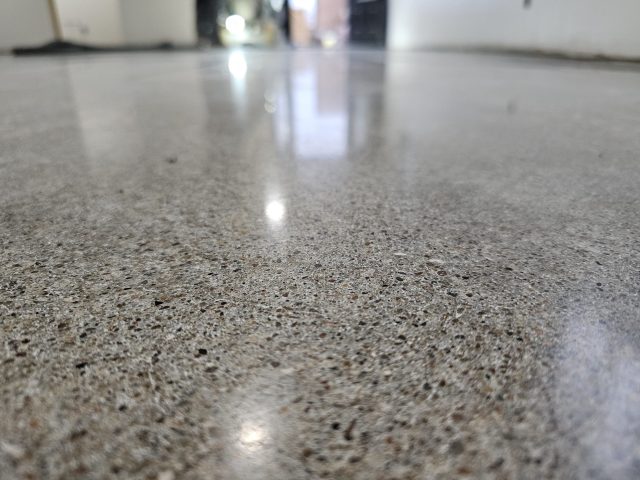
For dining areas, the priorities are aesthetics, ease of cleaning, and slip resistance under light spill conditions. Polished concrete, decorative concrete overlay, and metallic epoxy are popular FOH choices in Kansas City. For kitchens, prep areas, and dish rooms, the priorities are chemical resistance, thermal shock tolerance (floor temps swing from near-freezing during morning deliveries to 200°F+ under steam tables), and certified slip resistance — a topic that directly affects your health code compliance and liability exposure.
Restaurant Flooring System Comparison by Zone
| Zone | Recommended System | Cost / sq ft | Key Performance Feature | Lifespan |
|---|---|---|---|---|
| Commercial Kitchen / BOH | Urethane Cement Mortar | $8 – $14 | Thermal shock resistance, grease resistance | 15 – 25 years |
| Prep & Dishwash | Troweled Epoxy or Urethane Cement | $6 – $10 | Seamless, chemical resistant | 10 – 15 years |
| Dining Area / FOH | Polished Concrete or Decorative Overlay | $4 – $8 | Aesthetics, durability | 20 + years |
| Bar Area | Stained & Sealed or Metallic Epoxy | $5 – $10 | Alcohol/spill resistance, design appeal | 10 – 20 years |
| Walk-In Cooler / Freezer | Cementitious Urethane | $9 – $15 | Extreme cold tolerance, anti-slip | 15 – 20 years |
USDA and Health Code Compliance in Kansas City Restaurants
The Kansas City metro’s health departments (both Kansas and Missouri sides) inspect restaurant floors for three primary criteria: seamless surfaces in food preparation areas (no grout lines that harbor bacteria), slip resistance, and the ability to withstand the cleaning chemicals used in commercial kitchen sanitation protocols. Urethane cement and properly specified troweled epoxy systems satisfy all three criteria and are explicitly accepted by the USDA for food processing environments. High Stakes Epoxy provides specification documentation for health department submissions upon request.
Cost and ROI for Kansas City Restaurant Operators
A complete restaurant flooring project — kitchen, prep, dining, and bar — typically runs $35,000–$90,000 for a 2,500–5,000 sq ft restaurant footprint in the Kansas City market. The ROI calculation should account for three factors: reduced slip-and-fall liability (restaurant floors are the highest-claim category in commercial general liability insurance), reduced labor for cleaning (seamless systems clean in half the time of grouted tile), and health code compliance (a failed floor inspection can result in temporary closure — a catastrophic revenue event for any restaurant).
Maintenance Requirements for Restaurant Floors
Commercial kitchen floors should be cleaned after every shift with a degreaser appropriate for the coating system. High Stakes Epoxy provides a written maintenance specification for every restaurant project, including approved cleaning products and concentrations. Using acidic cleaners on epoxy or alkaline cleaners on urethane cement outside of the specified range can degrade the surface chemistry over time. Annual inspections to recoat worn areas before they breach the substrate prevent the much more expensive scenario of full floor replacement.
Frequently Asked Questions: Restaurant Flooring in Kansas City
What is the best flooring for a commercial kitchen in Kansas City?
Urethane cement (urethane mortar) is the industry-standard recommendation for commercial kitchen floors in Kansas City. It handles thermal shock from steam cleaning, resists grease and organic acids, meets health code requirements for seamless surfaces, and provides a certified anti-slip texture. It is more expensive than epoxy upfront but lasts significantly longer in kitchen conditions.
Does restaurant kitchen flooring need to be certified slip-resistant?
Yes. Kansas City health codes align with NSF/ANSI and OSHA standards requiring a COF of at least 0.6 in wet kitchen conditions. Urethane cement and broadcast epoxy systems installed by High Stakes Epoxy include a built-in aggregate texture that meets or exceeds this standard and is documented in the project specification.
How long does restaurant floor installation take in Kansas City?
A typical restaurant kitchen floor of 800–1,500 sq ft can be installed in 3–5 days, including moisture testing, surface prep, and full system cure. High Stakes Epoxy coordinates restaurant floor projects around the kitchen’s closure schedule — typically overnight and weekend installation to minimize revenue disruption.
Can I use polished concrete in a commercial kitchen?
Polished concrete is not recommended for wet commercial kitchen environments due to its porosity under sustained grease and moisture exposure without frequent guard-treatment maintenance. It is an excellent choice for dining rooms and bar areas. The standard specification is polished concrete in the FOH and urethane cement in the BOH, with a clean transition detail at the kitchen threshold.
What does restaurant floor coating cost in Kansas City?
Restaurant kitchen floors run $8–$14/sq ft for urethane cement; dining room polished concrete runs $4–$8/sq ft. A full restaurant flooring project for a 3,000 sq ft space (1,000 sq ft kitchen, 2,000 sq ft dining) typically costs $24,000–$50,000 installed in the Kansas City market.
See more of our work on the High Stakes Epoxy website.