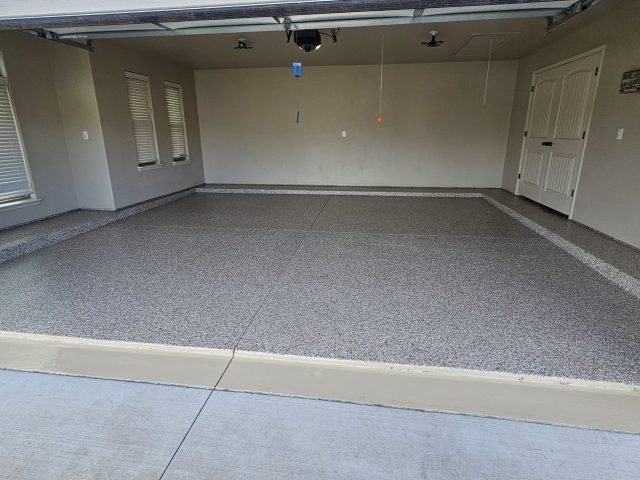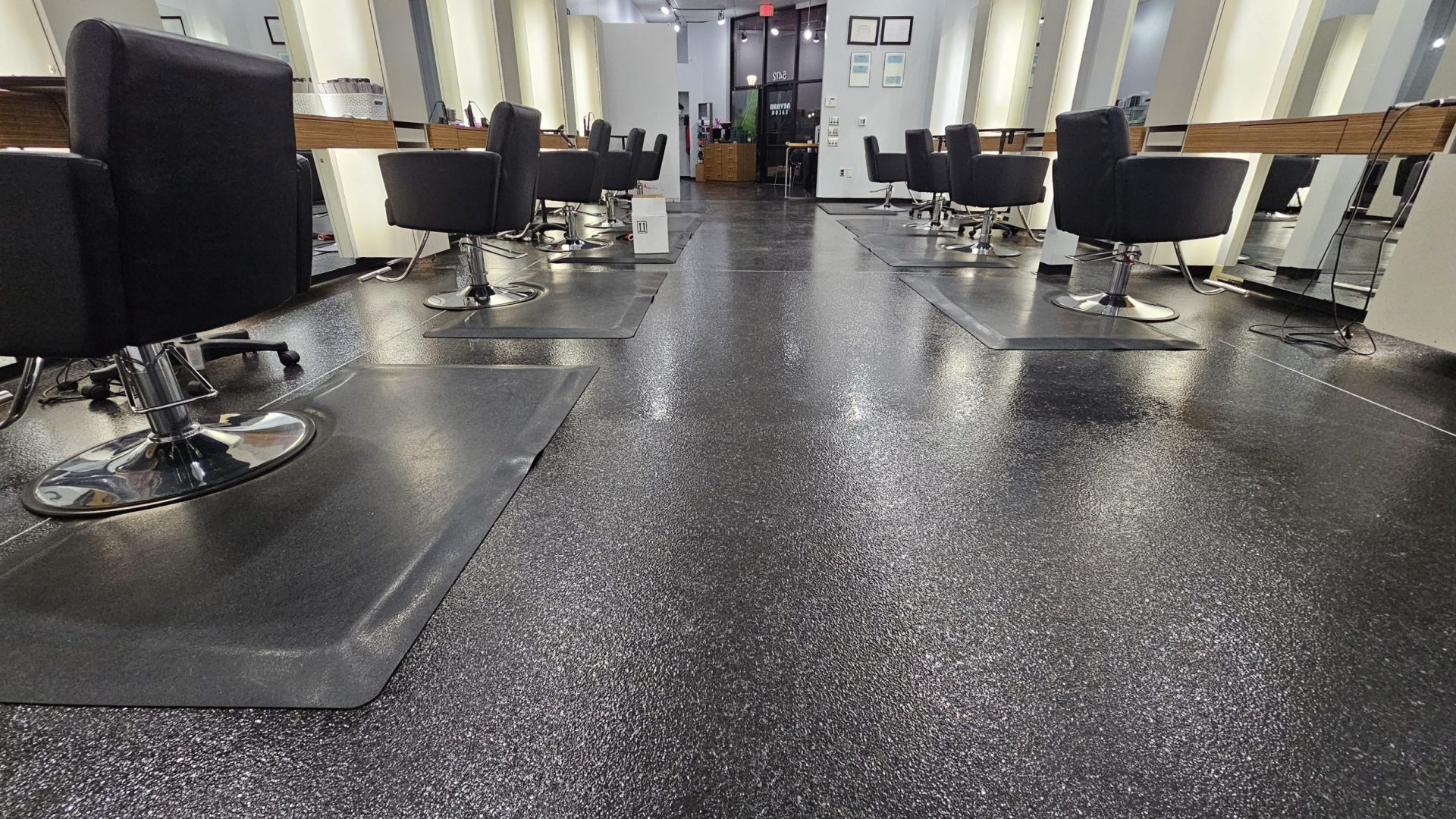
Kansas City warehouses face a brutal combination of forklift traffic, heavy pallet loads, chemical spills, and the temperature swings that come with operating in the Midwest. Choosing the wrong floor coating means cracked surfaces, delamination, and expensive mid-lease repairs. Choosing the right one means a floor that lasts 10 to 20 years, reduces dust, and actually contributes to operational efficiency. This guide compares the three systems High Stakes Epoxy LLC installs most often in the I-435 and I-70 warehouse corridors of Kansas City, KS.
Why Your Warehouse Floor Is a Business Decision, Not Just a Maintenance Line Item
Facility managers in Johnson County and the greater KC metro often treat the floor as an afterthought — until a forklift wheel clips a failing joint, a pallet rack leg punches through a delaminated coating, or an OSHA inspector flags a dusty, slippery surface. A properly specified concrete floor coating delivers measurable returns: reduced dust means better air quality and lower HVAC filter costs; a reflective surface can reduce lighting energy consumption by 20 to 30 percent; and a sealed floor is far easier to clean, cutting labor costs across every shift.
The three systems warehouses in Kansas City most commonly request are high-build epoxy coatings, polished concrete, and grind and seal. Each has a distinct price point, performance profile, and ideal application. Understanding the differences before you call a contractor will save you from the wrong specification.
Warehouse Flooring System Comparison
| System | Installed Cost (KC market) | Lifespan | Forklift Rating | Chemical Resistance | Maintenance | Best For |
|---|---|---|---|---|---|---|
| High-Build Epoxy (100% solids) | $4 – $8 / sq ft | 7 – 15 years | Excellent | Excellent | Low — annual recoat optional | Chemical storage, food-grade, clean rooms |
| Polished Concrete (Level 3–4) | $3 – $6 / sq ft | 20 – 30 years | Good | Good (with densifier) | Very low — wet mop | High-clearance logistics, e-commerce fulfillment |
| Grind & Seal | $2 – $4 / sq ft | 5 – 10 years | Good | Moderate | Low — reseal every 3–5 years | Budget-conscious, transitional facilities |
Cost and ROI Analysis for Kansas City Warehouse Operators
On a 50,000 sq ft warehouse, the cost difference between grind and seal ($100K–$200K) and polished concrete ($150K–$300K) is real — but so is the life-cycle math. Polished concrete eliminates the 3-to-5-year reseal cycle that grind and seal requires, which adds $1.50–$2.50/sq ft in recurring costs. Over a 15-year occupancy, polished concrete often comes out cheaper in total cost of ownership. High-build epoxy justifies its higher upfront cost in environments where chemical resistance is non-negotiable — pharmaceutical distribution, food processing, or any facility where a spill creates a liability.
Kansas City warehouse operators also benefit from the reflectivity dividend. Facilities that switch from bare concrete to a Level 3 or 4 polish routinely report 20–25% reductions in lighting costs, since the floor acts as a secondary reflector. On a 50,000 sq ft floor with $60K/year in lighting costs, that’s $12K–$15K in annual savings.
Maintenance Requirements by System
Polished concrete requires the least ongoing maintenance: daily dust mopping, weekly wet mopping with a neutral pH cleaner, and annual burnishing to restore the gloss. Epoxy floors need the same daily and weekly routine but are more susceptible to UV yellowing in dock areas exposed to sunlight; a UV-stable topcoat adds $0.50–$1.00/sq ft at installation but eliminates this issue. Grind and seal floors need resealing on a 3-to-5-year schedule depending on traffic intensity; skipping this maintenance window leads to surface abrasion and eventual concrete exposure.
Lifespan Expectations in KC’s Industrial Environment
Kansas City’s climate — freeze-thaw cycles, summer humidity — can stress concrete floors that are not properly sealed before coating. High Stakes Epoxy always performs moisture vapor emission rate (MVER) testing before any installation. Elevated moisture in KC warehouse slabs (common in buildings near the Missouri and Kansas rivers) can cause coating delamination within months if not addressed. With proper prep, a high-build epoxy system can last 10–15 years under moderate forklift traffic; polished concrete with annual densifier treatment can reach 25–30 years.
Frequently Asked Questions: Warehouse Flooring in Kansas City
What is the best flooring for a warehouse with heavy forklift traffic?
For warehouses with constant sit-down forklift traffic and loads over 5,000 lbs, a 100% solids epoxy system at 40–60 mils dry film thickness is the most impact-resistant option. For lighter electric pallet jack traffic, polished concrete is sufficient and offers superior long-term value.
How long does warehouse epoxy flooring last in Kansas City?
A professionally installed high-build epoxy system in a Kansas City warehouse typically lasts 7–15 years depending on traffic load, chemical exposure, and whether proper concrete prep was performed. Delamination failures are almost always a prep issue, not a product issue.
What does warehouse floor coating cost in Kansas City, KS?
Depending on the system and condition of the existing concrete, Kansas City warehouse floor coating runs $2–$8 per square foot installed. Grind and seal is at the lower end; multi-layer high-build epoxy with broadcast aggregate for slip resistance is at the higher end.
Can I coat my warehouse floor while staying operational?
Yes. High Stakes Epoxy sections large floors into zones, allowing operations to continue in coated areas while work proceeds in adjacent sections. Most 20,000–50,000 sq ft warehouses can be completed in 5–7 days using this approach.
Does polished concrete hold up to pallet jacks in a warehouse?
Yes. Level 3 and 4 polished concrete with a lithium silicate densifier provides a surface hardness that handles standard electric pallet jacks and even light sit-down forklifts without damage. It is not recommended for environments with heavy abrasives or acid spills without an additional guard treatment.
See more of our work on the High Stakes Epoxy website.